You Won’t Believe What I Found in Uppsala
Uppsala isn’t just a quiet university town—it’s a cultural goldmine waiting to be explored. I went in expecting old buildings and libraries, but left stunned by vibrant traditions, hidden art spaces, and centuries-old customs still alive today. From cathedral secrets to student nations hosting folk nights, every corner told a story. This is more than sightseeing—it’s stepping into a living culture. And honestly? I didn’t see any of it coming.
First Impressions: A Town That Feels Like History Breathes
Arriving in Uppsala by train from Stockholm, the shift in atmosphere is immediate. The capital’s urban pulse gives way to a calmer rhythm, where tree-lined avenues lead to red-brick buildings and narrow cobblestone lanes. There’s a quiet dignity in the air, a sense that you’ve entered a place shaped by centuries of thought and tradition. Uppsala University, founded in 1477, is the oldest in Sweden and one of the oldest in Northern Europe. Its presence permeates the city, not just in architecture but in the very pace of life. Students in dark academic gowns walk briskly between lectures, their voices blending with the chime of bicycle bells and the rustle of autumn leaves.
Yet Uppsala is no dusty relic. The energy of over 40,000 students keeps the town vibrant, ensuring that historical gravitas coexists with youthful creativity. Cafés near Carolina Rediviva, the university’s grand library, buzz with conversation in multiple languages. Bookstores display both ancient manuscripts and modern bestsellers. The Fyris River glimmers under the pale Nordic sun, reflecting the spires of the cathedral and the laughter of students lounging on its banks. This blend of old and new creates a rare balance—scholarly yet accessible, traditional yet alive.
What struck me most was how naturally history integrates into daily life. There are no velvet ropes or tourist-only zones. You can stand in the same courtyard where Carl Linnaeus once taught botany or sip coffee in a café that once served as a meeting place for 18th-century philosophers. The past isn’t preserved behind glass; it’s part of the present. This seamless continuity sets the stage for deeper cultural discovery, inviting visitors not just to observe, but to participate in a living academic and social tradition.
The Heartbeat of Tradition: Uppsala Cathedral and Its Living Legacy
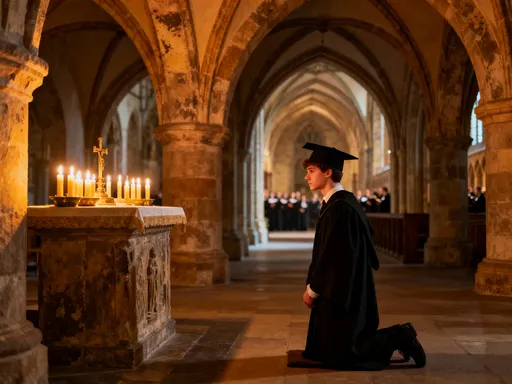
Rising above the city skyline, Uppsala Domkyrka stands as a monument to both faith and national identity. Its twin spires, completed in the late 19th century, dominate the horizon, but the cathedral’s roots stretch back to the 13th century. As the seat of the Archbishop of the Church of Sweden, it has played a central role in the country’s religious and political life for generations. Walking through its towering Gothic arches, one feels the weight of centuries—of coronations, royal weddings, and state funerals that have unfolded within these stone walls.
But Uppsala Cathedral is far more than a historical monument. It is a living, breathing space where tradition continues to evolve. Weekly choir rehearsals fill the nave with hauntingly beautiful acoustics, and local families attend Sunday services in Swedish, often accompanied by organ music that echoes through the vaulted ceilings. The cathedral hosts national celebrations, including the annual celebration of Saint Erik, patron saint of Sweden, and plays a key role during national holidays such as Christmas and Easter. Even royal events, like the wedding of Crown Princess Victoria in 2010, have taken place here, linking the modern monarchy to deep historical roots.
Inside, the cathedral tells stories through its art and burials. The tombs of King Gustav Vasa and his sons remind visitors of the Protestant Reformation’s impact on Sweden, while the ornate chapels reflect changing artistic styles over centuries. One of the most moving spaces is the Chapel of the Virgin Mary, where soft light filters through stained glass depicting biblical scenes. Guides often point out subtle architectural details—carved faces in the stonework, hidden symbols in the woodwork—that reveal the craftsmanship and spiritual devotion of earlier eras.
What makes the cathedral truly special is its accessibility. Unlike some European cathedrals that feel distant or overly formal, Uppsala’s welcomes quiet contemplation. Visitors are free to sit in the pews, light a candle, or simply listen to the silence between musical notes. It’s a place where history isn’t performed but lived, where the sacred and the everyday coexist in harmony. For anyone seeking to understand Swedish culture, this cathedral offers a profound starting point—not as a museum, but as a center of ongoing community life.
Student Nations: Where Culture Comes Alive After Class
One of the most surprising discoveries in Uppsala is the student nation system—a network of 13 student-run organizations, each historically linked to a different region of Sweden. These are not fraternities or social clubs in the American sense, but deeply rooted institutions that preserve regional customs, cuisine, and music. Each nation operates its own building, often centuries old, where students gather for dinners, dances, lectures, and celebrations. They are funded by student membership and run entirely by students, making them a unique blend of tradition and youth leadership.
I attended an evening at Västgöta Nation, one of the oldest and most active. The building, a charming 18th-century house near the river, was warmly lit, with wooden floors creaking underfoot and folk art lining the walls. The night began with a traditional gasqu—a formal student dinner featuring multiple courses, including herring, meatballs, and crispbread, all paired with beer and snaps. What made it special was the atmosphere: respectful yet joyful, structured yet spontaneous. Students wore formal attire, some in regional folk costumes, and toasted each other with songs that have been sung for generations.
After dinner, the dance floor opened. A live folk band played polskas and waltzes, and students invited guests to join in. No one minded if you stepped on toes or forgot the sequence—laughter was part of the tradition. The dances themselves are centuries old, passed down through student generations, and each nation has its own repertoire. These events aren’t tourist attractions; they are authentic cultural practices, open to members and their guests. Many Swedes look back on their nation years as some of the most meaningful of their lives.
The nations also serve practical purposes. They offer affordable meals, study spaces, and social support. But more importantly, they create a sense of belonging. For students from rural areas, joining the nation linked to their home region provides a comforting connection to family and heritage. For international students, it’s a rare opportunity to engage with Swedish culture from the inside. The nation system exemplifies how tradition can be both preserved and renewed—by young people, for young people—making Uppsala not just a place of learning, but of cultural continuity.
Gustavianum and Academic Rituals: Learning Like a Local
Nestled in the heart of the university district, Gustavianum stands as a testament to Uppsala’s intellectual legacy. Built in the 1620s, it served as the university’s main building for centuries, housing lecture halls, a library, and even a chapel. Today, it functions as a museum, but stepping inside feels less like entering an exhibit and more like stepping into a living archive of academic life. The building’s austere façade gives way to richly decorated interiors, where portraits of past professors gaze down from paneled walls and ancient scientific instruments rest behind glass.
The museum’s highlights include the Academy Room, where student disputations were once held in Latin—a tradition that continued into the 19th century. These formal debates were central to academic training, testing students’ logic, rhetoric, and knowledge. Chairs arranged in a semicircle evoke the intensity of those sessions, where a single student would defend a thesis while professors and peers challenged every point. Though Latin disputations are no longer part of the curriculum, the spirit of rigorous inquiry lives on in Uppsala’s academic culture.
Gustavianum also houses the University Coin Cabinet and the Museum of Evolution, including the remains of early humans and prehistoric animals. One of the most fascinating exhibits is the reconstructed anatomical theater, used in the 17th century for medical lectures. With tiered seating surrounding a central table, it was here that students observed dissections—an experience both educational and deeply symbolic of the era’s scientific curiosity.
What makes Gustavianum remarkable is how it connects past and present. Modern students visit not just as tourists, but as heirs to a long tradition. Some attend lectures in the building during special events, dressed in academic gowns, continuing rituals that span centuries. The university still holds ceremonial gatherings, such as the promotion of new doctors, where graduates walk in procession through the city. These events are not mere pageantry; they reinforce a sense of identity and continuity. In a world where education often feels transactional, Uppsala reminds us that learning can also be a deeply cultural and communal act.
Offbeat Art & Independent Galleries: Creativity Beyond the Mainstream
While Uppsala’s historical landmarks draw many visitors, its contemporary art scene offers a different kind of revelation. Away from the main tourist routes, tucked into converted warehouses and former workshops, a network of independent galleries and artist collectives thrives. These spaces showcase the work of emerging Swedish and international artists, often blending traditional techniques with modern themes. They reflect a city where creativity isn’t confined to institutions but flourishes in unexpected corners.
One such space is Kunsthall Uppsala, a non-profit gallery dedicated to experimental and socially engaged art. Located in a repurposed industrial building, it hosts rotating exhibitions that challenge viewers to think critically about identity, environment, and society. During my visit, a multimedia installation explored the relationship between nature and technology, using soundscapes from the Swedish forest paired with digital projections. The work felt both rooted in local landscapes and globally relevant.
Another highlight is the Artists’ Quarter near the river, where former factory buildings now serve as studios and exhibition spaces. Open studio days allow the public to meet artists, watch them work, and even participate in workshops. I met a ceramicist who uses traditional Scandinavian glazing methods but shapes her pieces into abstract forms inspired by modern architecture. Her studio, filled with the scent of clay and wood-fired kilns, was a testament to how heritage can inspire innovation.
Street art also plays a growing role in Uppsala’s cultural landscape. Murals appear on the sides of buildings, often created during annual festivals that invite local and international artists. Unlike some cities where graffiti is seen as vandalism, Uppsala embraces it as a form of public expression. One striking piece near the train station depicts a flock of birds transforming into books, symbolizing the city’s identity as a center of knowledge and freedom. These creative spaces prove that Uppsala’s culture is not frozen in time, but constantly evolving—honoring the past while embracing the new.
Seasonal Rhythms: How Swedes Celebrate in Uppsala
In Uppsala, the calendar itself feels like a cultural roadmap. The city’s rhythm changes with the seasons, and each month brings its own traditions, many of which are deeply tied to student life. The most famous is Walpurgis Night on April 30th, when students gather in white caps to celebrate the arrival of spring. The event begins with a morning march through the city, led by student choirs singing traditional songs. The air fills with anticipation as thousands converge on the castle park, where speeches, music, and dancing continue into the night.
The white student cap, or studentmössa, is more than a fashion statement—it’s a symbol of academic achievement and community. Worn during celebrations and formal events, it connects modern students to generations past. On Walpurgis, seeing the sea of white caps under the soft twilight of the Nordic spring is a powerful image of continuity and joy. The celebrations are inclusive, with families, professors, and visitors joining in. Food stalls offer pea soup and pancakes, a traditional combination, while folk bands play melodies passed down for over a century.
Midsummer is another highlight, though celebrated more privately in Uppsala than in rural areas. Still, the city takes on a festive air, with maypoles erected in parks and flower crowns appearing in markets. Students who remain in town often host small gatherings, dancing around the maypole and singing songs that mark the year’s longest day. These celebrations are not performances for tourists but genuine expressions of cultural identity, rooted in pre-Christian traditions yet adapted to modern life.
Even the darker months have their rituals. December brings candlelit processions and Christmas markets, where handmade crafts and mulled wine create a warm contrast to the cold. The university choir performs at the cathedral, their voices echoing through the stone walls. These seasonal events remind us that culture is not static—it breathes with the year, shaped by light and darkness, growth and rest. For visitors, timing a trip around these moments offers a rare glimpse into the heart of Swedish life.
Why Uppsala Changes How You See Nordic Culture
Many people imagine Scandinavian cities as sleek, minimalist, and somewhat reserved—places of design and efficiency, but not necessarily warmth or tradition. Uppsala challenges that stereotype. Here, Nordic culture reveals its depth: not as a lifestyle brand, but as a lived reality shaped by history, education, and community. The city doesn’t perform tradition; it practices it. Whether in a cathedral choir, a student nation dinner, or a spring celebration, cultural rituals are not reenactments but ongoing threads in daily life.
What makes Uppsala exceptional is how seamlessly these traditions are passed down. They are not guarded by institutions alone, but carried forward by young people who see them as meaningful, not outdated. The student nation system, the academic ceremonies, the seasonal festivals—all depend on active participation. This is culture as a shared responsibility, not a museum exhibit. It suggests a society that values continuity without resisting change, where innovation grows from a strong foundation of identity.
For women in particular—especially those raising families or seeking meaningful travel experiences—Uppsala offers a refreshing perspective. It shows how communities can honor their past while remaining open and inclusive. The emphasis on education, the support for the arts, the celebration of seasonal cycles—all speak to a balanced way of life. It’s a reminder that progress doesn’t require erasing tradition, but integrating it into modern values.
Traveling here isn’t about checking off landmarks. It’s about slowing down, listening, and allowing yourself to be surprised. It’s about realizing that culture isn’t something you watch from a distance, but something you step into, participate in, and carry with you. Uppsala doesn’t shout its significance. It whispers it—in the rustle of academic gowns, the echo of a folk song, the warmth of a shared meal.
Uppsala doesn’t shout about its treasures—it lets you stumble upon them. What starts as a casual visit becomes a real cultural awakening. Whether you're drawn to history, music, art, or simply the rhythm of local life, this city offers something quietly powerful: the chance to experience tradition not as performance, but as life lived. It’s not just worth visiting—it’s worth understanding.