You Won’t Believe These Secret Public Spaces in Nuku'alofa
Nuku’alofa, Tonga’s quiet capital, hides something unexpected—vibrant public spaces most travelers completely miss. I stumbled upon them by chance, and honestly, they changed how I saw the city. Far from crowded tourist spots, these places buzz with local life, culture, and quiet beauty. Think open-air markets, seaside parks, and community squares where time slows down. This is the real Tonga—warm, authentic, and surprisingly alive.
Arrival in Nuku’alofa – First Impressions vs. Reality
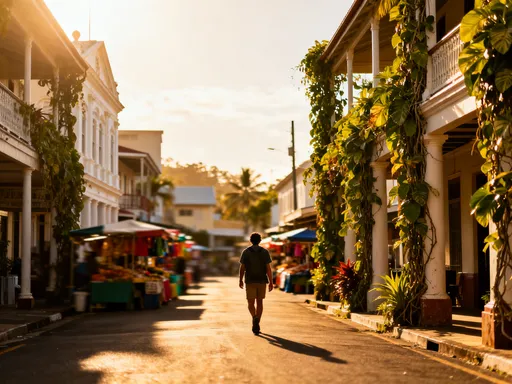
When I first stepped off the plane in Nuku’alofa, I admit I wasn’t expecting much. The airport is modest, the drive into town lined with low-rise buildings and swaying coconut palms. My initial impression was of a sleepy capital, one that seemed paused between moments. There were no towering skyscrapers, no bustling traffic, no neon signs. It felt, at first glance, like a place overlooked by time. But that assumption didn’t last long. Within hours, I began to notice movement in the quiet corners—a group of women laughing outside a corner store, children kicking a ball in a dusty lot, elders sitting on wooden benches sharing stories in soft, rhythmic tones. These weren’t just random moments; they were threads in a larger tapestry of daily life.
What struck me most was how public life here unfolds without fanfare. There’s no need for grand announcements or digital invitations. People gather because they know each other, because the rhythm of the day calls them. I realized that my mistake had been looking for landmarks when I should have been watching for life. The real heart of Nuku’alofa isn’t in a museum or a monument—it’s in the way a vendor arranges her fruit, the way families stroll after church, the way music drifts from a radio in an open doorway. These are the moments that define the city, subtle but deeply rooted.
By shifting my focus from what the guidebooks highlighted to what the streets revealed, I uncovered a different kind of travel experience. Instead of checking off attractions, I began to observe, to listen, to wait. And in that stillness, I found energy—a quiet pulse that runs beneath the surface of this small capital. Nuku’alofa isn’t underdeveloped; it’s differently developed. Its richness lies not in infrastructure but in intimacy, not in scale but in connection. That shift in perspective changed everything.
The Heartbeat of the City: Central Market as a Living Public Space
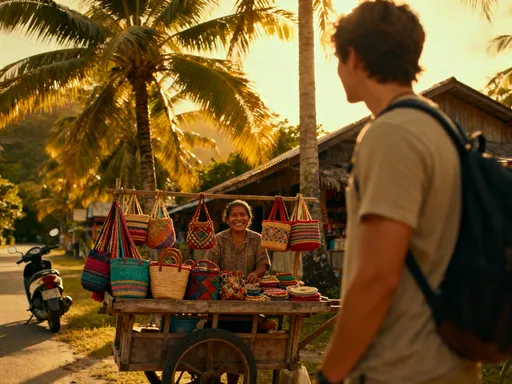
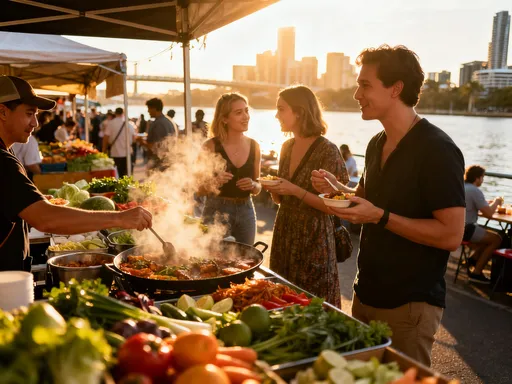
If there’s one place where Nuku’alofa truly comes alive, it’s the Central Market. Nestled near the waterfront, this open-air bazaar is a symphony of color, scent, and sound. Rows of wooden stalls overflow with ripe papayas, golden pineapples, bundles of taro leaves, and baskets of fresh-caught fish still glistening in the morning light. The air is thick with the earthy smell of root vegetables, the sweetness of tropical fruit, and the briny tang of the sea. Vendors call out in melodic tones, not to hawk their goods aggressively, but as part of a daily rhythm, a familiar exchange that has played out for generations.
But the Central Market is far more than a place to buy food. It’s a living public space where news travels faster than Wi-Fi. It’s where a mother hears about a school event, where a fisherman learns of changing tides, where elders share wisdom over shared kava roots. The market operates on trust and familiarity. Transactions are often accompanied by smiles, small talk, and the occasional shared joke. A customer might linger not to bargain, but to catch up on family news. This isn’t commerce in the impersonal sense—it’s community in action.
Every morning, women arrive before sunrise to claim their spots, carefully arranging their produce with pride. Many are part of multi-generational families who have sold here for decades. Their routines are precise: cleaning the stall, laying out woven mats, arranging fruits in patterns that feel almost ceremonial. These rituals aren’t just about presentation; they’re expressions of identity and dignity. For visitors, the market offers more than souvenirs or snacks—it offers a window into Tongan values: respect for elders, pride in craftsmanship, and the deep importance of shared space. To stand quietly and observe is to witness the heartbeat of the city.
Seafront Promenade: Where Community and Nature Meet
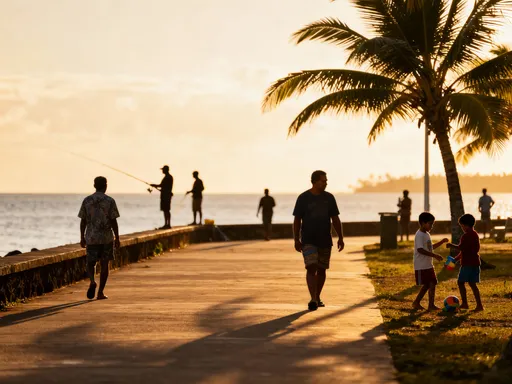
Just a short walk from the market lies another hidden gem: the seafront promenade. Stretching along the coast near the wharf and government buildings, this quiet walkway is where urban life meets the ocean. Unlike manicured boardwalks in tourist-heavy cities, this path feels organic, shaped by use rather than design. Concrete benches, some cracked with age, line the route, shaded by tall mango and banyan trees. The sea breeze carries the scent of salt and frangipani, and the sound of waves blends with distant laughter and the occasional strum of a guitar.
Locals use this space in deeply personal ways. Early in the morning, you’ll see joggers, elders doing light stretches, and couples walking side by side in comfortable silence. By midday, the heat drives most indoors, but in the late afternoon, the promenade comes alive again. Families arrive with picnic mats, children kick off their sandals to dip their toes in the water, and teenagers gather in small groups, talking and laughing under the fading sun. On weekends, it’s not uncommon to find impromptu music sessions—a man with a ukulele, a group singing traditional songs, voices rising and falling with the tide.
What makes this space so special is its balance of structure and spontaneity. The city has provided the basic framework—a paved path, some seating, trash bins—but the people have shaped its soul. There are no strict rules, no admission fees, no schedules. It belongs to everyone and no one. You can sit for an hour without buying anything, and no one will question your presence. This kind of open access is rare, and it speaks to a cultural value that prioritizes shared experience over commercial gain. For travelers, the promenade offers a rare gift: the chance to slow down, to breathe, and to simply be part of the moment.
Royal Botanic Gardens – A Hidden Oasis with History
Tucked away on the outskirts of the city center, the Royal Botanic Gardens is a peaceful retreat often missed by visitors. Established during the late 19th century, this green space has witnessed Tonga’s transition from monarchy to modern nationhood. Once part of the royal estate, the gardens were opened to the public in the mid-20th century, symbolizing a shift toward inclusivity. Today, they stand as a quiet testament to both natural beauty and national identity.
The gardens span several acres of lush vegetation, including native palms, flowering hibiscus, towering breadfruit trees, and carefully maintained lawns. A network of winding paths invites slow exploration, and the shade is so dense in places that sunlight filters through in soft, dappled patterns. What makes this place truly special, however, isn’t just its beauty—it’s how locals use it. On any given day, you might see students reading under a tree, couples walking hand in hand, or elders sitting on benches, eyes closed, faces turned toward the breeze.
Families often come here for quiet picnics, spreading mats beneath the banyan trees that seem old enough to remember the kingdom’s earliest days. Children chase butterflies or practice traditional dances in open clearings. The gardens don’t host grand events or concerts, yet they are alive with subtle activity. There’s a sense of reverence here, a quiet understanding that this space is both a gift and a responsibility. Unlike more commercialized parks, there are no food trucks or loud speakers—just the rustle of leaves and the occasional call of a bird. For those willing to step off the main road, the Royal Botanic Gardens offer a rare kind of peace: one that feels earned, not sold.
Fue Malino Park – Revival Through Community Effort
Not all public spaces in Nuku’alofa have always been thriving. Fue Malino Park, once a neglected corner of the city, stands as a powerful example of what happens when a community takes ownership. Years ago, this area was overgrown, littered, and rarely visited. But in the early 2010s, a group of local volunteers began organizing clean-up days, planting trees, and repairing benches. What started as a small act of care grew into a movement.
Today, Fue Malino Park is one of the most vibrant public spaces in the capital. Weekly events bring people together: youth football matches on Saturday mornings, craft fairs featuring handmade mats and woven bags, and storytelling sessions where elders share Tongan legends with wide-eyed children. The park now has a small playground, a shaded pavilion, and even a community garden where families grow vegetables together. These aren’t government-led initiatives—they’re grassroots efforts, driven by pride and connection.
What makes Fue Malino so meaningful is the sense of belonging it fosters. Parents bring their children not just to play, but to learn. Teenagers volunteer to help organize events, gaining leadership skills in the process. The park has become more than a green space—it’s a symbol of renewal, a reminder that even the most forgotten places can come back to life with care and commitment. For travelers, it offers a rare glimpse into the power of community action. You don’t need grand projects to make a difference; sometimes, it starts with a broom, a seedling, and a shared vision.
Public Squares and Church Grounds: Sacred and Shared Spaces
In Nuku’alofa, the line between sacred and public space is often beautifully blurred. Church grounds, in particular, serve as both spiritual centers and communal hubs. The large Free Wesleyan Church, located near the city center, is surrounded by open lawns and shaded walkways. On Sundays, it fills with worshippers in crisp white garments, but during the week, it becomes a place of quiet gathering. Elders sit on benches reading the Bible, children play tag between the trees, and couples walk hand in hand along the perimeter.
These spaces are governed by unspoken rules of respect. Voices are kept low, shoes are often removed before stepping onto sacred ground, and behavior remains dignified. Yet within these boundaries, there is warmth and welcome. The church grounds aren’t closed off—they’re open, inviting, and deeply integrated into daily life. This blending of the spiritual and the social reflects a core Tongan value: that faith is not separate from community, but woven into its fabric.
Similarly, public squares near government buildings take on new life during national celebrations. On Constitution Day or the King’s birthday, these open areas transform into stages for dance performances, feasts, and public speeches. The same space where civil servants walk to work becomes a venue for cultural expression. What remains constant is the sense of order and respect—even in celebration, there is a quiet dignity. These spaces remind us that public life isn’t just about function; it’s about meaning. They are places where identity is affirmed, traditions are passed down, and the collective spirit is renewed.
Why These Spaces Matter – Lessons for Travelers and Cities
The public spaces of Nuku’alofa offer more than scenic backdrops or photo opportunities. They provide a masterclass in how small cities can foster connection, resilience, and cultural continuity. In an era where urban design often prioritizes efficiency over humanity, Tonga’s capital shows another way: one where benches matter as much as buildings, where a shaded tree is as valuable as a shopping mall, and where the rhythm of life is set by people, not schedules.
For travelers, these spaces invite a different kind of exploration. Instead of rushing from one attraction to the next, they encourage slowness, observation, and presence. Sitting in the Central Market for an hour, walking the seafront at sunset, or simply watching children play in Fue Malino Park—these moments build understanding in ways that museums or guided tours rarely do. They allow us to see a culture not as a performance, but as a lived reality.
There’s also a lesson here for cities around the world. Public space doesn’t need to be grand to be meaningful. It doesn’t need to be expensive to be valuable. What it needs is accessibility, safety, and the freedom for people to shape it. When a community feels ownership over a space, it becomes more than concrete and grass—it becomes identity. Nuku’alofa proves that even in a small capital with limited resources, well-used public spaces can strengthen social bonds, preserve culture, and enhance quality of life.
For the mindful traveler, the invitation is clear: look beyond the obvious. Don’t just visit the landmarks—sit in the spaces between them. Ask where locals gather. Follow the sound of laughter. Let the city reveal itself not through brochures, but through its rhythms. Because in those quiet corners, in the unscripted moments of daily life, you’ll find the soul of a place.
These public spaces aren’t just places on a map—they’re where Tongan life unfolds in real time. They remind us that travel isn’t only about seeing sights, but about feeling the rhythm of a place. By stepping into these quiet corners of Nuku’alofa, we gain more than memories—we gain understanding. So next time you visit a small capital, don’t rush to the guidebook highlights. Sit down, look around, and let the city reveal itself.